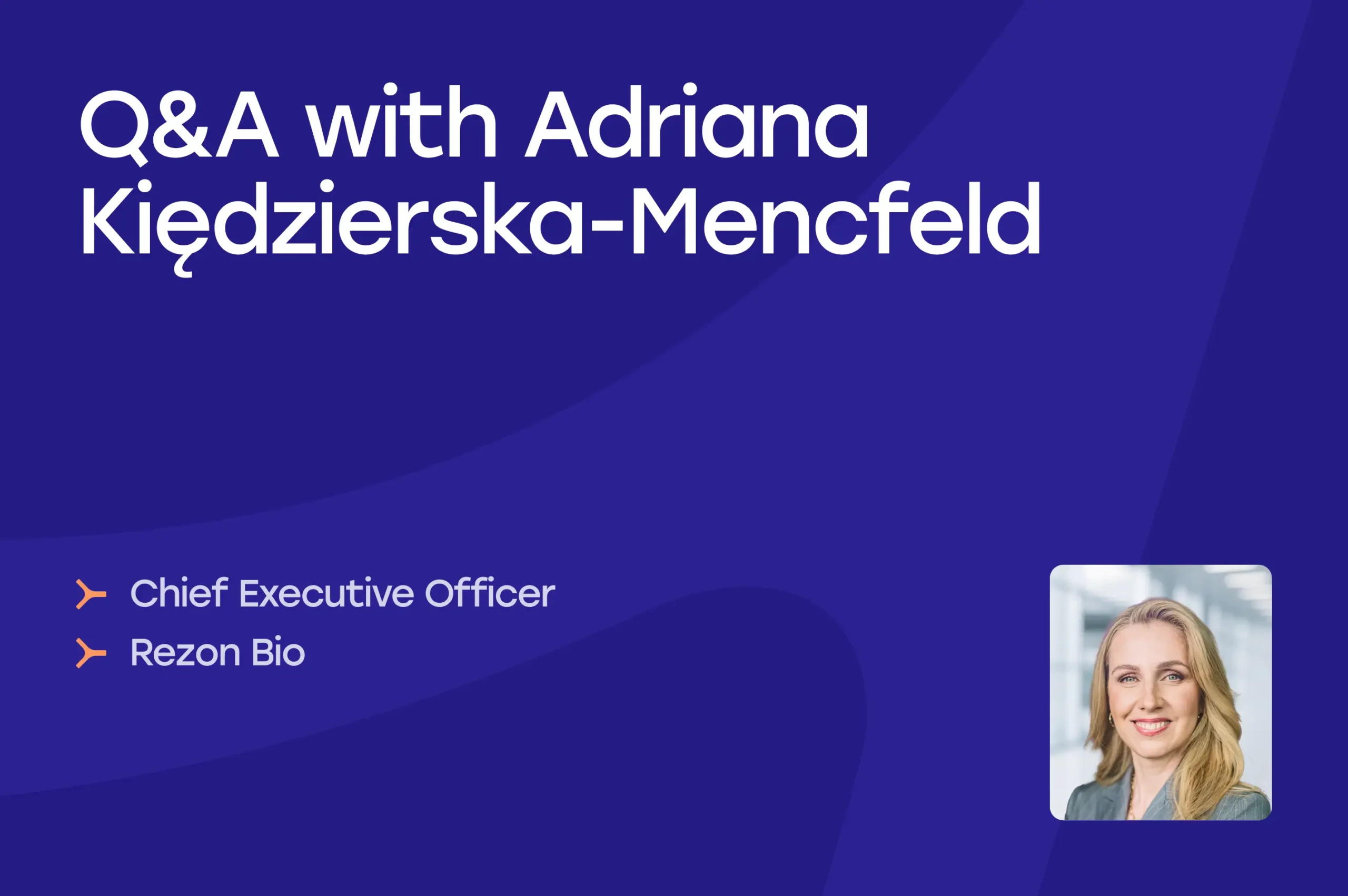
Q&A with Adriana Kiedzierska-Mencfeld, Chief Executive Officer, Rezon Bio
Q: Prior to your new role with Rezon Bio, you had been with Polpharma Biologics for more than a decade through a progression of roles. Can you walk me through that history and how it led to the new CDMO you are leading?
A: I joined Polpharma Biologics more than 11 years ago, when Polpharma Biologics was still part of Polpharma. We were a small group, just 39 people within the larger generics organization. At that time, we were working on a joint venture biosimilar program where the idea was to outsource development to a CDMO. I came in as the Pilot Plant Manager and the team then was only a handful of people: three or four in maintenance, one to establish warehouse, and four in production.
From the beginning, it became clear that outsourcing created big risks. As a small, unknown company, our program was constantly deprioritized, and delays mounted. I suggested we run development and clinical manufacturing in parallel internally, and if we could deliver faster and with the right quality, we’d take it over. That’s exactly what happened. We managed to supply clinical trial material ahead of a very established CDMO partner and later went on to execute PPQs (process performance qualifications) and launch products ourselves.
Over the years, we built two commercial lines in Gdańsk, Poland, that became the primary manufacturing source for global launches — one microbial and one mammalian — both approved by the FDA, EMA, ANVISA, the SFA, and other authorities. In parallel, we were building the team and the culture: people with passion, commitment, and the drive to prove biotech could be done at the highest level in Poland, combined with experts from big pharma and CDMOs who wanted to do things differently.
Later, we added our Duchnice site, a state-of-the-art facility near Warsaw, which complemented Gdańsk perfectly. Gdańsk is agile, science-driven, and flexible; Duchnice is focused on commercial execution, scale, and higher-volume delivery. Together, they create a very strong platform.
Through all this, we gained firsthand experience of what it’s like to be a small, unknown company relying on a CDMO — the frustrations, the risks, the feeling of not being prioritized. That’s why when we made the decision to create a CDMO business, we separated it from the biosimilars pipeline. If I were a client, I would never want to send my own program to a CDMO that was also developing competing biosimilars. Clients need to know their intellectual property is safe.
At the same time, we recognized how many small biotechs out there today need a reliable partner who will treat their projects with care. We know what it means when your “baby” is on the line. We also know how to navigate setbacks without losing momentum or motivation. That combination of experience — our own hard lessons, our scientific and operational expertise, and the culture we’ve built — is what convinced us the time was right to become a CDMO — Rezon Bio.
Q: The industry is in a strange moment right now — volatility, global supply chain restructuring, and geopolitical tensions. How impactful was the timing of the launch, in terms of both internal and external factors, in shaping the vision for Rezon Bio?
A: Five years ago, we were still developing the track record we have today. We were learning on someone else’s product, which is not the right position to be in. Today, we know how to anticipate and mitigate risks, and we can clearly explain them to clients so they can make informed decisions. That maturity makes all the difference.
The current global environment also creates opportunities. With tariffs and restrictions on China, there’s growing demand for high-quality, cost-competitive alternatives within Europe. From Poland, we can deliver that — a lower price point with uncompromised quality.
At the same time, regulatory changes like the U.S. phase III waiver are opening the biosimilars market to more players. That’s great for patients, because it will drive prices down and increase access, but it also raises the bar for CDMOs. The FDA isn’t lowering its requirements, so the winners will be those who can combine quality with reasonable timelines and costs. That’s exactly where we’re positioned.
Q: In your view, does having worked on biosimilar programs give you an edge in solving complex problems compared with companies focused only on innovator molecules?
A: Definitely. In many ways, proving biosimilarity is far more difficult than developing a novel product. With an innovator, you need to demonstrate safety and efficacy, but with a biosimilar you must show you are neither worse nor better — you must match the originator within defined ranges. Those ranges are constantly shifting, because the originator continues to produce new batches with their own natural variability. That means you need to continuously monitor your own product with a very high degree of precision.
The analytical methods are extensive, the purification steps are highly complex, the regulatory pathways are demanding, and cost of goods sold needs to be kept low to be competitive on the market. And beyond that, the market challenge is tough: after seven or 10 years, other innovators can appear, so you’re competing in a crowded space. Winning in biosimilars requires both scientific rigor and speed, along with low costs which are not easy to achieve together.
Having experienced these hurdles ourselves, we can leverage that experience. We know how to work faster and more cost efficiently because we’ve lived through those challenges. We’ve also navigated approvals with multiple agencies — EMA, MHRA, FDA, SFDA, ANVISA in Brazil — so we understand the nuances of different regulatory environments. That knowledge puts us in a strong position to guide clients through complexity and deliver the right support for their products.
Q: Do you see a sweet spot right now — the types of programs or scales where you think Rezon will excel early on?
A: We’ve worked with products at many different stages, so I wouldn’t say there’s one specific ideal project for us. From clone selection and upstream process development through scale-up and commercial manufacturing, we’re very strong, in both microbial and mammalian systems. We currently offer cell line development through our established network of partners, but we are building that capability internally. We also have deep experience with single-use technologies. I was personally involved in testing prototypes from a large single-use provider, long before they were GMP-ready, so I understand the issues that can arise and how to control for them. That background gives us an edge in both flexibility and problem-solving. For us, the more relevant question is the client’s goal: Do they need material for Phase I or II? Are they preparing for commercial launch? Depending on the answer, we can steer the project to the right facility — Gdańsk for agility and early-stage work or Duchnice for larger-scale commercial supply. The two sites work closely together, so transfers are truly seamless. We’re especially effective at process optimization and cost-of-goods reduction, but we’re also excited to support novel biologics. Many of our scientists are passionate about contributing to innovative therapies, and we see that as a natural evolution of our work. Most importantly, we see customers as true partners. It’s not just about delivering a service but about building trust and working together to bring their product to market. That client-centric partnership mindset, combined with our technical breadth, allows us to take on a wide variety of projects with confidence. We always want our clients to feel safe, respected, and supported by a reliability that they can truly feel.
Q: How do you demonstrate your values and establish trust with new partners from day one?
A: There are a number of contributing factors. First, trust starts with experience: clients need to know they’re working with experts who have successfully brought products to market before. Having that track record on site gives clients confidence. Equally important is transparent communication — ensuring there are no surprises. If something unexpected happens, we tell the client immediately: here’s what we’re seeing, here’s what we’re investigating, and here’s when we’ll come back with a proposal to address it. Clients can choose to be deeply involved in the root-cause analysis if they want, or they can simply wait for the solution. Either way, they know exactly what’s happening and that it’s under control. That openness creates trust, because clients don’t feel they need to micromanage us or worry that something’s being hidden. We ensure that they can be informed partners in the process but not necessarily be burdened with every problem. Finally, there’s the human side. These are long, complex projects, and working with people who are passionate and energized makes a huge difference. Our teams bring that positivity, and it makes collaboration much smoother and ultimately more enjoyable.
Q: Does your experience in later-stage work and process optimization not only benefit those kinds of programs but also give you an edge with early-stage clients, in terms of being able to flag manufacturability or developability issues that an early-stage CDMO might not identify?
A: Absolutely. For early-stage projects, our biggest advantage is that we can guide clients through the entire journey of bringing a product to market. We don’t just execute the work in front of us — we help them understand what needs to be prepared, what to prioritize, and where the potential risks lie and propose ways to mitigate those risks before they become problems. If a client comes in with a great scientific idea but isn’t sure how to translate it into a viable product, we can show them the path forward. Our experience with commercialization means we’re always thinking several steps ahead, making sure their product is positioned to succeed not just in the lab but in the market.
Q: Can you expand on the capabilities of the two sites and how you see them driving success for client programs?
A: Both Gdańsk and Duchnice have full development and manufacturing capabilities, but each brings different strengths to Rezon Bio and our partners. In Gdańsk, we can support projects from the very earliest stages, starting with clone selection using our Ambr® system for rapid screening and then moving into larger bioreactors for scale-up, process characterization, and preparation for production. The site is fully single-use, with two 1,000-liter bioreactors and complete upstream and downstream trains. That makes it ideal for Phase I and II trials, but it can also handle Phase III and smaller commercial volumes. Duchnice, by contrast, is built for larger-scale work. It currently has two fully single-use manufacturing lines, each centered on 2,000-liter bioreactors. Line one runs three 2,000-liter units; line two will ultimately run four, and it’s already set up for intensified fed-batch processing. Buffers and media are prepared in stainless steel to reduce costs, but everything else is single-use. Importantly, Duchnice was designed to expand: we already have a third cleanroom ready to host additional bioreactors, and the site can grow to accommodate lines four and five — or even double in size by mirroring the existing buildings. However, what really makes both sites stand out is the people. We’ve built teams that combine long-standing experience from Polpharma Biologics with talent from big pharma and top CDMOs. Some colleagues even left for larger organizations and later returned, which to me speaks volumes about the culture and the quality of work here.
Q: What roles do digital technologies, including artificial intelligence, play in your operations today, and what’s your vision for how they might evolve in the years ahead?
A: Digitalization and innovation are truly in our DNA. Many people here are driven by the excitement of working with new approaches and that enthusiasm drives our efforts. AI is a hot topic within Rezon Bio, and we’re already exploring how it can support us. For example, while we’re not yet using AI directly in manufacturing, we’ve applied it in designing our third manufacturing line, helping us decide how far to go with automation and machine learning, what’s available on the market, and how to strike the right balance between efficiency, compliance, and risk. Digitalization also shows up in smaller, everyday improvements. Our business technology team constantly looks for processes that can be streamlined, and we’ve developed a closed AI system that helps increase efficiency across a range of activities, from document translation to pattern recognition in data. Importantly, we see AI as a supportive tool to make our teams more effective, not something that replaces people. Ownership and responsibility remain with our teams. Looking further ahead, our strategy group is evaluating which emerging technologies we should adopt over the next five to 10 years so that we don’t fall behind. For us, innovation isn’t about being novel for its own sake — it’s about creating real value for customers. We want to ensure that new technologies reduce risks, accelerate timelines, and lower costs, so our clients see clear benefits when they work with us.
Q: What’s your long-term vision for the company? Are there particular milestones you’re aiming for over the next few years to stay on track toward that goal?
A: Over the next five years, our aim is to be a well-recognized CDMO, especially a top partner for midsize pharma companies and biotechs, including startups. We’re focusing on clients who no longer want to go to the very large CDMOs, where volumes and priorities don’t align with their needs. Competing at the extreme high-volume end isn’t our target. Instead, we want to be known as a flexible, agile, and tailored service provider who is able to deliver value, quality, and efficiency through cost-effective solutions across the biologics development journey. Looking further ahead, we anticipate investments to expand capacity and potentially enter new modalities — we’re still analyzing where that will make the most sense. First and foremost, we want to fully utilize our current capabilities and consistently deliver a level of service that not only meets but exceeds client expectations. That’s the foundation we’re committed to building on.
Q: Shifting the focus from Rezon Bio as a whole to you as the CEO — what excites you most about this next chapter?
A: For me, it’s both professional and deeply personal. I’ve had the privilege of growing within this company for more than a decade, always finding new challenges just when I might have thought about moving on. I started as a Pilot Plant Manager, and today I’m stepping into the role of CEO. That kind of journey is rare in our industry, and I see it as a tremendous privilege — not only for me but for many of our team members who have followed similar paths. Having people who have grown within the organization for years means our clients work with experts who know each other well, who have learned side by side, and who bring a shared history of collaboration and success. When partners come to Rezon Bio, they’re gaining continuity, with the same trusted people guiding their projects from one milestone to the next. This new chapter is especially meaningful because it comes with real responsibility, not only for more than a thousand employees and their families but also for the promises we’ve made to our clients and the industry. We’ve committed to delivering high-quality projects, and it’s my responsibility to ensure that trust is never broken. What excites me most is that I don’t take this journey alone. I’m surrounded by an exceptional team — people I know well, who trust me, and whom I trust in return. Together, we’ve built a strong foundation at Polpharma Biologics, and now we have the chance to take it even further with Rezon Bio. It’s a challenge, yes, but it’s also an incredible opportunity to create something lasting and recognized: a CDMO partner that clients know they can trust. That’s what makes this journey so exciting for me.
Q: As we wrap up, is there a final message you’d like to underscore as you introduce Rezon Bio to the world?
A: We can have the most advanced facilities and cutting-edge technologies, but without the right people behind them, none of it matters. What truly defines Rezon Bio is our team — their commitment, their passion, their belief in what we’re building. That’s what makes clients want to work with us and remain partners: not just the science and technology, but the people they trust and enjoy collaborating with. For me, that’s also what keeps me energized every day. Even when challenges arise, it’s the team’s dedication and spirit that give us the strength to move forward.
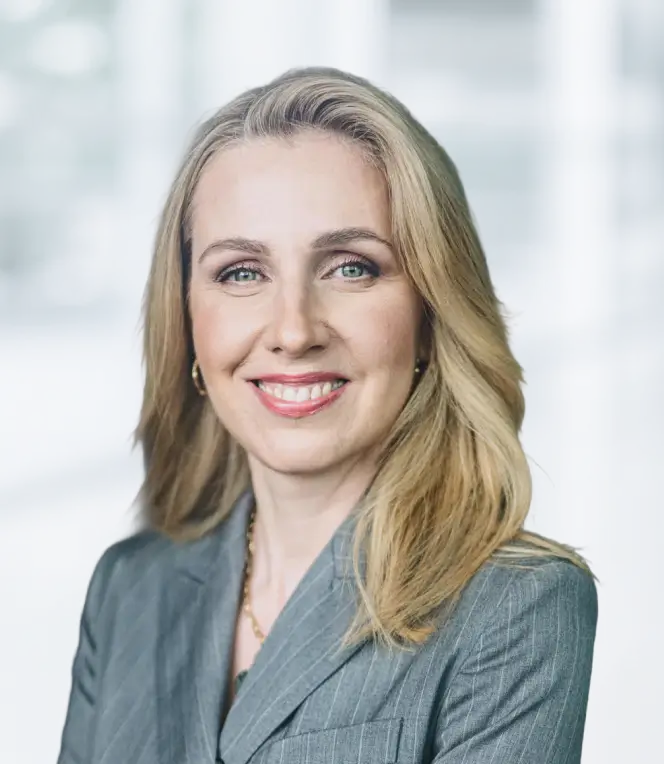
Adriana Kiędzierska-Mencfeld
Chief Executive Officer, Rezon Bio
Short bio:
Adriana is the CEO of Rezon Bio, where she leads the company’s strategic and operational direction. With over 20 years in biotech, including senior leadership roles at Polpharma Biologics, she brings deep expertise in biologics development and manufacturing. Adriana holds a Ph.D. in Molecular Biology and is currently pursuing an Executive MBA at IMD Business School.