Brian Gazaille (BPI) with Mateusz Ludwisiak and Piotr Sabiło (Rezon Bio): A Conversation on Contract Manufacturing, Intensified Processes, and Operational Excellence
The interview was conducted by and published in BioProcess International. Below we present selected excerpts from it. The full article is available in the October 2026 BPI Featured Report and can be found here.
Process intensification has become a common refrain in biopharmaceutical manufacturing. Companies have clear business reasons to increase process productivity while decreasing resource requirements, equipment footprints, and production costs. Intensified processes have an ethical dimension, too, holding promise for improving scalability and decreasing costs in ways that increase drug accessibility. Recent technical advances are beginning to make such processes — perfusion and highdensity cell culture, multicolumn chromatography, fully continuous manufacturing methodologies, and more — viable for commercial operations. Thus, industry discussions now turn quickly from technical capability to adoption: What form(s) of intensification might be most effective for my company, and how should my facility go about implementation?
In September 2026, the BioProcess International team had the chance to learn about future-forward biomanufacturing facilities from Mateusz Ludwisiak (service competitiveness director) and Piotr Sabiło (project management and operational excellence head) of Rezon Bio, an integrated biologics contract development and manufacturing organization (CDMO) based in Poland. Ludwisiak and Sabiło agreed that process intensification (PI) can bring significant benefits for process economics. However, they emphasized that PI should be just one consideration in a holistic discussion about flexibility and operational excellence in a company’s manufacturing system. Below is our correspondence, with Ludwisiak and Sabiło’s responses combined.
Foundations for Operational Excellence
BPI: How would you describe Rezon Bio’s facilities
and their core capabilities?
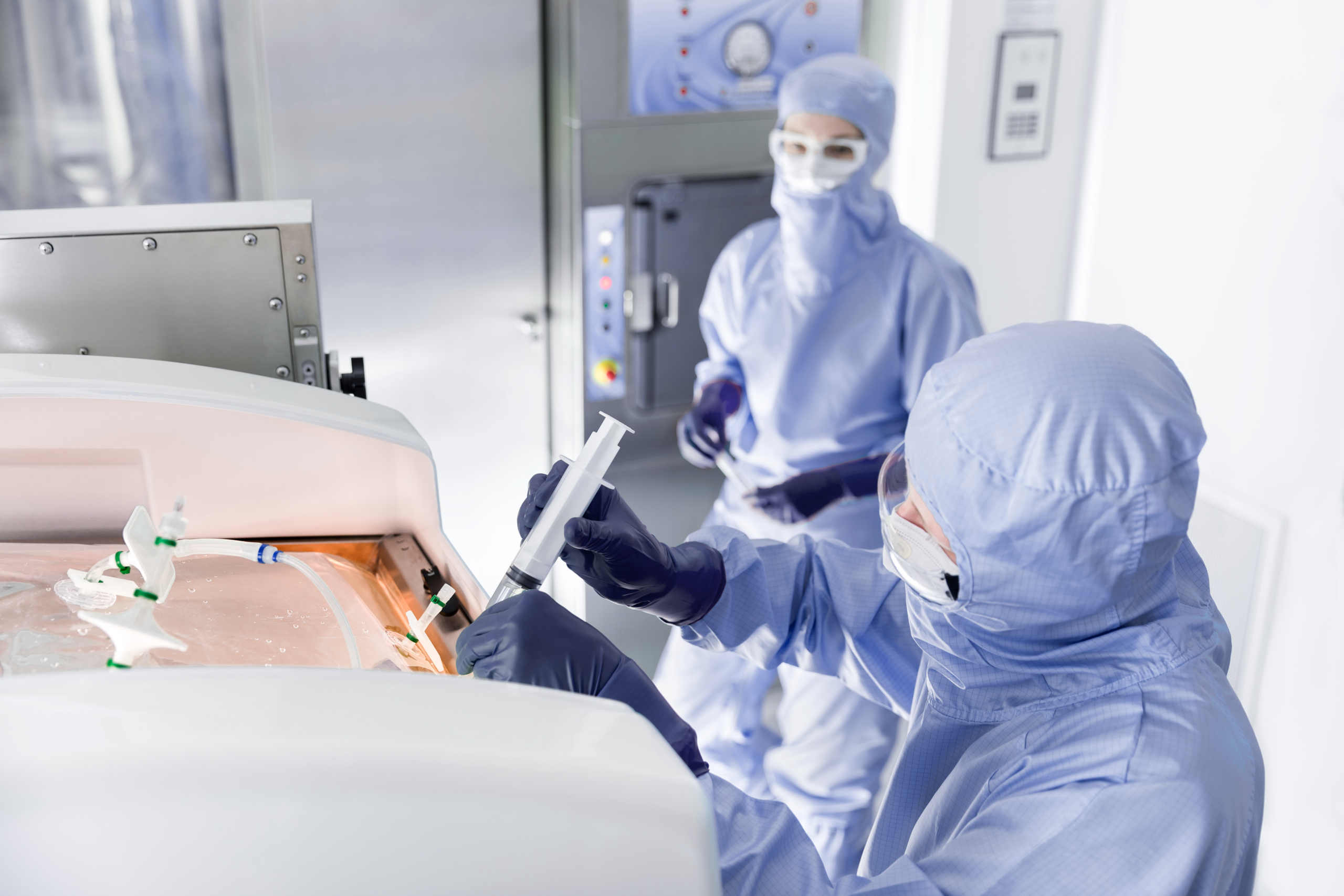
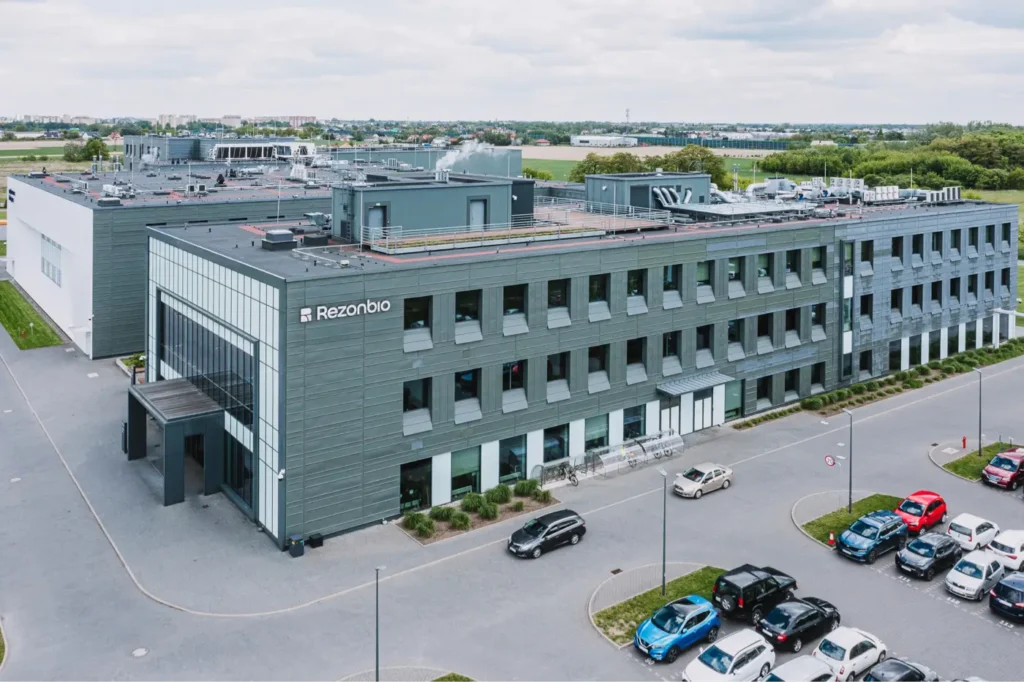
Ludwisiak and Sabiło: Rezon Bio is built around two complementary sites in Poland that together support biologics programs from early development through clinical and commercial supply. Our Gdańsk site serves as the development and earlystage clinical manufacturing hub. It brings together process, analytical, and drug-product development with flexible, phase-appropriate good manufacturing practice (GMP) capabilities, enabling programs to progress from process development and scale-up to clinical supply and technology transfer.
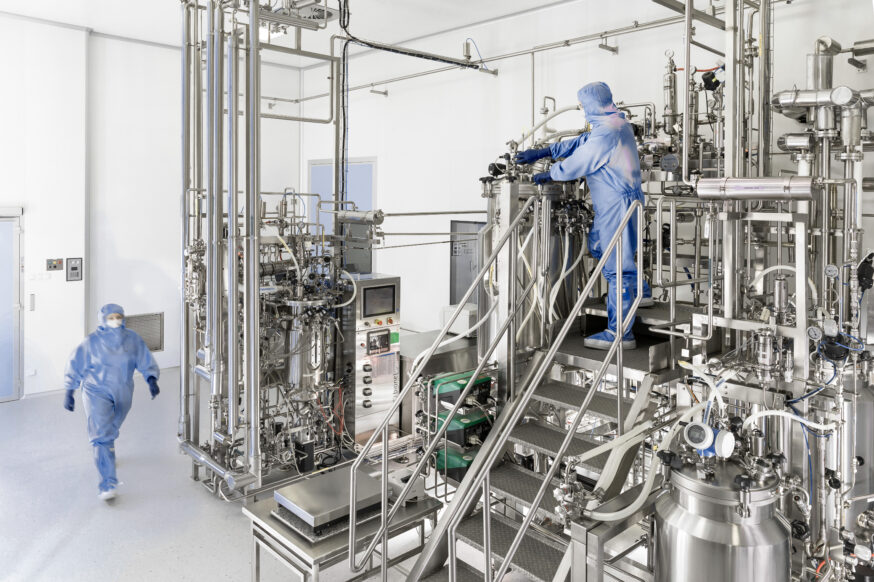
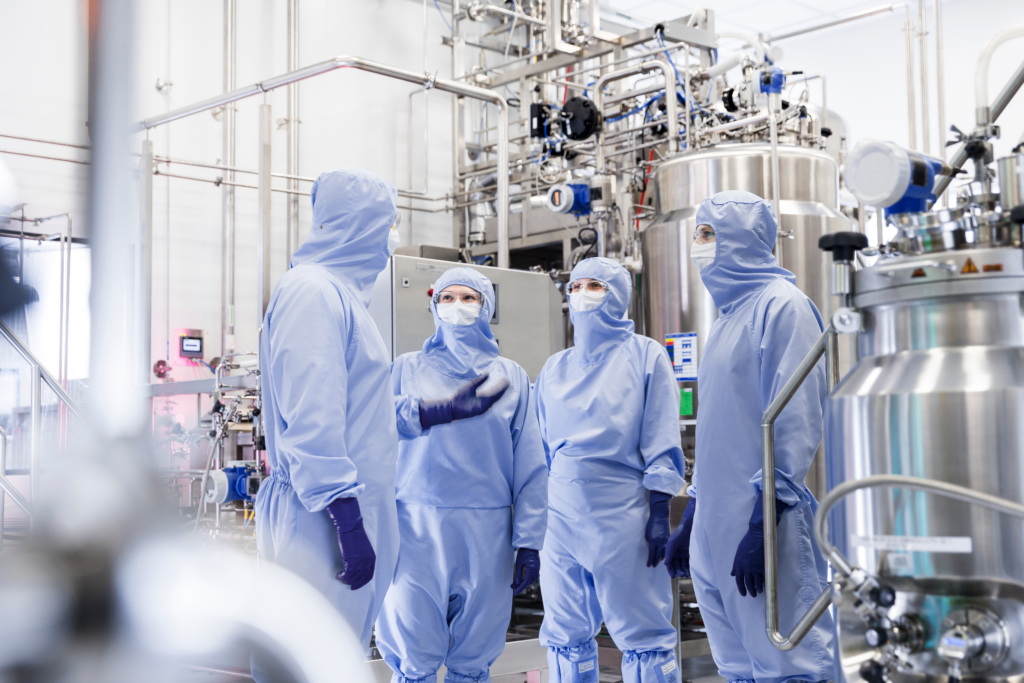
Our Warsaw-Duchnice site provides large-scale clinical and commercial manufacturing. It features two fully single-use manufacturing lines centered on 2000-L bioreactors, with further expansion underway, as well as smaller (50–500 L) single-use bioreactors that provide additional flexibility. The site is designed for high-volume commercial production of monoclonal antibodies (mAbs) and other complex biologics, with built-in space for additional lines as demand grows.
The strength of this two-site model lies in how seamlessly the facilities work together. Programs need to move from development into GMP manufacturing without unnecessary handovers, repeated work, and loss of process knowledge. We therefore focus on integrated governance, common quality expectations, and cross-functional planning across different teams.
That operating model is supported by a strong execution track record: more than 15 technology transfers, more than 35 customer and regulatory audits, and biologics that have been supplied commercially across multiple markets. Our facilities have received approval from the US Food and Drug Administration (FDA) and European Medicines Agency (EMA) and are regularly inspected by major global regulatory authorities. This combination of development capability, commercial-scale infrastructure, and regulatory experience enables us to support both emerging biotechnology companies and established biopharmaceutical organizations.
The strength of this two-site model lies in how seamlessly the facilities work together. Programs need to move from development into GMP manufacturing without unnecessary handovers, repeated work, and loss of process knowledge. We therefore focus on integrated governance, common quality expectations, and cross-functional planning across different teams.
BPI: Considering growing demand for diverse biologics, what capabilities must CDMOs have in place to keep pace with customer needs?
Ludwisiak: For CDMOs, flexibility is becoming just as important as installed capacity. Customer pipelines evolve, programs progress at different speeds, and facilities must accommodate client needs without creating excessive idle capacity or adding unnecessary cost.
That requires flexibility across the entire operating model. Single-use platforms, rapid changeovers, and multiproduct operations can improve asset utilization, while flexible staffing and multidisciplinary teams help align resources with changing demand. Digital capacity modeling and digital-twin approaches can also support fast, data-driven decisions and identify constraints before they become operational problems.
The most effective CDMO facilities combine adaptable infrastructure with strong execution and can introduce intensified processes such as perfusion, high-density fed-batch cell culture, and continuous chromatography without requiring fundamental redesigns each time a portfolio changes.
For CDMOs, flexibility is becoming just as important as installed capacity. Customer pipelines evolve, programs progress at different speeds, and facilities must accommodate client needs without creating excessive idle capacity or adding unnecessary cost.
The Role of Intensification
BPI: What role might PI play in helping CDMOs to optimize processes, operations, and resource use?
Ludwisiak: PI is an important lever for improving how effectively we use our manufacturing assets, people, and time. Heightened process productivity can reduce the number of batches required to deliver a given volume of product. That improves asset utilization and can create capacity for additional customer programs without immediately requiring further capital investment. It can also reduce cycle times and improve overall manufacturing economics.
However, PI only creates value if the broader operation is designed to capture those benefits. We therefore look beyond individual process performance and evaluate PI’s impact on the entire manufacturing flow, including equipment utilization, staffing, throughput, cycle time, cost of goods, and delivery reliability.
For us, it is all about using the right process and operating model to achieve greater productivity and flexibility while maintaining robust, predictable, and compliant manufacturing.
BPI: How would you describe CDMO uptake of PI? Are certain processes and technologies being leveraged or underused more than others?
Sabiło: Adoption of PI is progressing, although not uniformly across the industry. Single-use bioreactors and fluidmanagement systems are already well established, whereas high–cell-density processes, intensified fed-batch, and perfusion are becoming increasingly relevant. We also see growing interest in approaches that increase throughput and equipment utilization, such as multicolumn chromatography.
Where we see the greatest opportunity is not simply adopting individual technologies, but integrating them effectively into the overall manufacturing system. A more productive upstream process, for example, can shift constraints downstream or into scheduling, staffing, and support functions. The benefit therefore needs to be assessed across the entire value stream. PI should go hand in hand with flexible facility design, effective capacity planning, workforce flexibility, and data-driven operations. A productive process on its own does not necessarily translate into a productive facility.
The next stage of PI will therefore be about optimizing the manufacturing system as a whole, connecting process technology with people, assets, and operating models to improve throughput, flexibility and predictable delivery
BPI: What difficulties might arise when a site begins to implement intensified processes? And what strategies might alleviate such problems?
Ludwisiak: The challenges usually extend well beyond the process itself. From a technical perspective, higher cell densities and longer or continuous operations can place additional demands on media preparation, harvest, clarification, and chromatography. Process control also becomes more important, and in many cases, process analytical technology (PAT) requirements become more sophisticated. If those dependencies are not considered early, improving one process step can simply shift the bottleneck elsewhere.
Operationally, established procedures may no longer fit a new process. Standard operating procedures (SOPs), training models, shift structures, cleaning approaches, and changeovers may all need to be reconsidered. There is also a financial dimension: Intensification can require investment in equipment and automation, but technology transfer and validation can temporarily consume capacity before PI’s benefits are fully realized.
The human factor is equally important. Teams that have operated traditional fed-batch processes for many years need time to build confidence in new ways of working. We have found that the best approach is phased implementation: starting with clearly defined pilots, establishing measurable key performance indicators (KPIs), and involving manufacturing, manufacturing science and technology (MSAT), quality, and operational excellence functions from the beginning.
Capacity modeling and digital simulation can help identify constraints before physical changes are made. At the same time, training, flexible staffing, knowledge management, and standardization need to develop in parallel, allowing lessons learned in one area or at one site to be transferred efficiently across the organization.
Aligning People, Processes, and Functions
BPI: Have you had a particularly memorable experience with PI or new-technology adoption? What did you learn from that experience?
Sabiło: A memorable experience was an operational optimization project for a commercial manufacturing program. By improving process execution and driving cross-functional collaboration, we doubled annual production between 2023 and 2024 without compromising product quality, GMP compliance, or documentation standards. The project enabled us to respond to increasing demand using existing assets, and it reinforced that increasing manufacturing productivity is not just about introducing new technology. The greatest gains come from aligning people, processes, and functions around a shared objective.
BPI: Intensification aside, what facilities and operational concerns are most pressing for CDMOs?
Sabiło: One of the biggest challenges for CDMOs is maintaining high utilization while supporting an increasingly diverse customer portfolio. Programs have different timelines, technical requirements, and levels of maturity, which creates constant pressure on capacity, scheduling, and workforce planning. Access to experienced biomanufacturing talent is equally important. Beyond recruitment, CDMOs need to build broad skills and capabilities as well as flexible operating models that allow adaptation as demand changes. Supply-chain resilience, particularly for single-use components and critical raw materials, also remains essential. At the same time, CDMOs need to remain cost-competitive while consistently meeting global quality and regulatory expectations. Our response is a strong operating system: standardized work, visual management, structured problem solving, continuous capability development, flexible staffing, and data-driven capacity planning. Together, these elements significantly increase the reliability and efficiency of our facility